Project Introduction: Automatic License Plate Reader, UX Research
Background:
The Automatic License Plate Reader (ALPR) camera is a crucial device in a security infrastructure, aiding in the identification, tracking, and monitoring of vehicles. However, upon release of the ALPR device, user feedback and observations pointed towards potential issues that hindered the effectiveness and usability of the device.
Outcome: After completion of research and final testing, the ALPR device and technology achieved a 90% improvement rate, cut down ALPR installation time to ~7 minute, and resulted in 2 global design awards (award details here and here!).
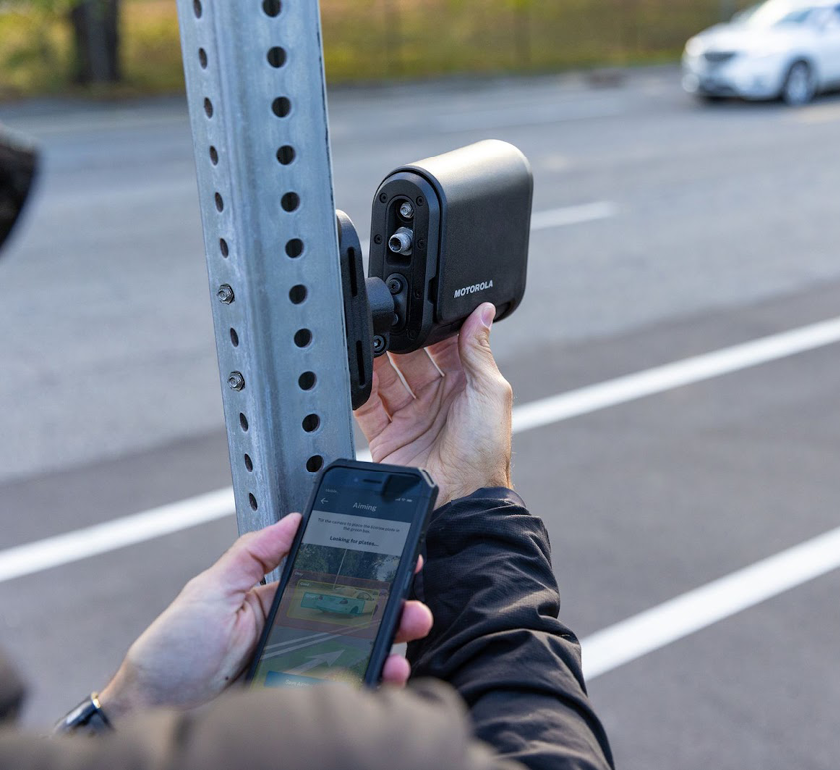
Quick Deploy ALRP
Objective:
The primary objective of this project was to conduct thorough usability research to identify, address, and rectify any usability-related issues associated with the automatic license plate reader (ALPR) camera and installation experience. By doing so, we strove to enhance user experience, streamline operational efficiency, and maximize the devices's overall effectiveness.
Request from CTO:
This project was directly requested by our Chief Technology Officer (CTO) with a speedy(!) delivery request as competitors recently released a similar device. It was imperative that the usability research was to be conducted quickly with meticulous attention to detail to meet the needs of CTO and achieve usability effectiveness throughout the customer experience.
Relevant Skills & Experience for the ALPR Research Request
As a Senior UX researcher, this project aligned perfectly with my skills and expertise. My skills in research planning, usability testing, qualitative analysis, and communication played a critical role when delivering valuable insights and recommendations to enhance and rectify the user experience for this project. Additionally, my ability to collaborate with cross-functional teams and translate research findings into actionable strategies positioned me as a valuable asset for this UX research project.
Research Project Approach
Strategy:
Upon the research request, we assembled a multidisciplinary “Core Team” of UX researchers, UX/Industrial designers, Industrial/Mechanical Engineers, Developers, and Sales Engineers to strategize and tackle the problem.
To address the research problem and scope, I spearheaded the development of a strategic plan to encompass various product stages, research methods, design incorporation, user testing, while streamlining timelines with development, production, and engineering.
Project Plan
Over the course of 14 weeks and within 6+ Design/Dev Sprints, the core team collectively conducted multiple rounds of:
Development Checkpoints (14 total) : Conducted each development release (weekly) by appointed developers and designers to pre-test usability and align as UX and Development. This was not QA testing and focused more on usability and functional requirements.
Expert Reviews (17 total): Conducted pre-release (weekly) by appointed SME’s to test specific features and workflows, and report/identify focus areas for user research
User/Customer Research (8 total): Conducted by two senior researchers (myself included) to test 3-5 users every-other development sprint release and post expert review. After 3-5 user tests of the end-end installation, researchers delivered both a high level insight report and a complete synthesized insight report.
Timeline considerations: Quarter closings, release trains, development, design and research working time, end user calendars, and CTO testing and check-ins with CMO regularly.
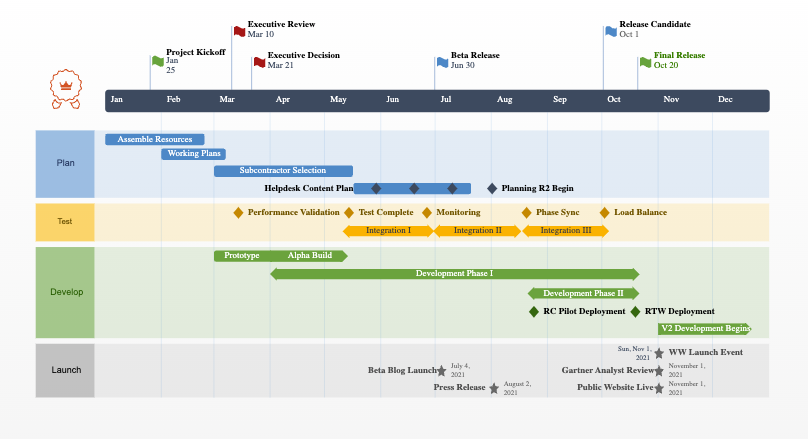
(Illustration Example) Gantt Chart & Strategic Plan Created by Me
Research Methods
We utilized qualitative research methods to gather in-depth insights into issues during the installation process of the ALRP deployment.
Expert Review Using Subject Matter Experts (SMEs)
Selected SMEs individually tested the end-to-end installation of the ALPR device to identify usability issues before user testing.
Each expert gathered and submitted their feedback from the test through a template created by the researchers to ensure consistency across all SMEs.
The expertise of the SME’s helped pinpoint usability flaws and pre-test the product before any user test. This saved the project both time and resources, helped gather more data points, and successfully identified usability issues to ultimately improve the user experience.
Usability Testing / Contextual Inquiry
Recruitment: Sales Engineers and Researchers collaborated to recruit a diverse pool of users to ensure a comprehensive representation of the target user base considering level of experience in ALPR, installation location, traffic volume, and others factors.
Observation of Task: Observed users conduct the full “quick deploy” installation of the ALPR device and studied their interactions with the corresponding the app.
Open-Ended Questioning: Through thoughtful probing and open-ended questioning, I gathered insights into user preferences, pain points, and overall satisfaction with the interface and functionalities.
Insight Reporting: Delivered high level and comprehensive insight reports after each round of usability testing with end users. Reports not only addressed and uncovered the problem at hand, but also to proposed solutions to directly addressed user needs and preferences. These actionable insights were communicated to the Core Team, tracked by priority, and addressed in future Sprints.
Outcome
After completion of research and final testing, the ALPR device and technology achieved a 90% improvement rate, cut down ALPR installation time to just 5 minute, and resulted in 2 global design awards.
Addressed Usability Issues & Impact
Current ALPR technology and device installation results in about 85% accuracy in license plate recognition. Previously, ALPR technology was not picking up plates and accurately read plates at a much lower rate.
Simplified installation process of the device down to 8 simple steps and deployment in just 5-7 minutes. Previously, it took users much longer to deploy themselves.
Out of box experience, installation video, and a “getting started” instruction site have become the new standard!